How To Check Heating Oil Tank Steel Thickness Uk
Start with a careful visual inspection, then use ultrasonic thickness readings only on cleaned steel patches as a screening aid—not as a substitute for an OFTEC-registered service inspection. OFTEC’s household tank-check advice is clear: homeowners can look for rust and corrosion, but a professional inspection remains the annual baseline.
What UK homeowners should check first
Before any meter comes out of the case, walk the tank and pipework. Look for rust blooms, weeping stains, bulging, damaged supports, and unusual fuel use. OFTEC also flags tanks over about twenty years old as a cue to ask whether replacement timing is approaching. Keep the area clear so a technician or fuel driver can still access the tank safely.
- Metal tank shell: flaking rust, deep pitting, or thin-looking patches
- Base and supports: damp oil staining, soft ground, or distorted stands
- Pipework and fittings: corrosion at joints, loose sensors, damaged fill lines
- Insurance: confirm whether spill clean-up is covered before you rely on DIY findings
How ultrasonic screening fits the job
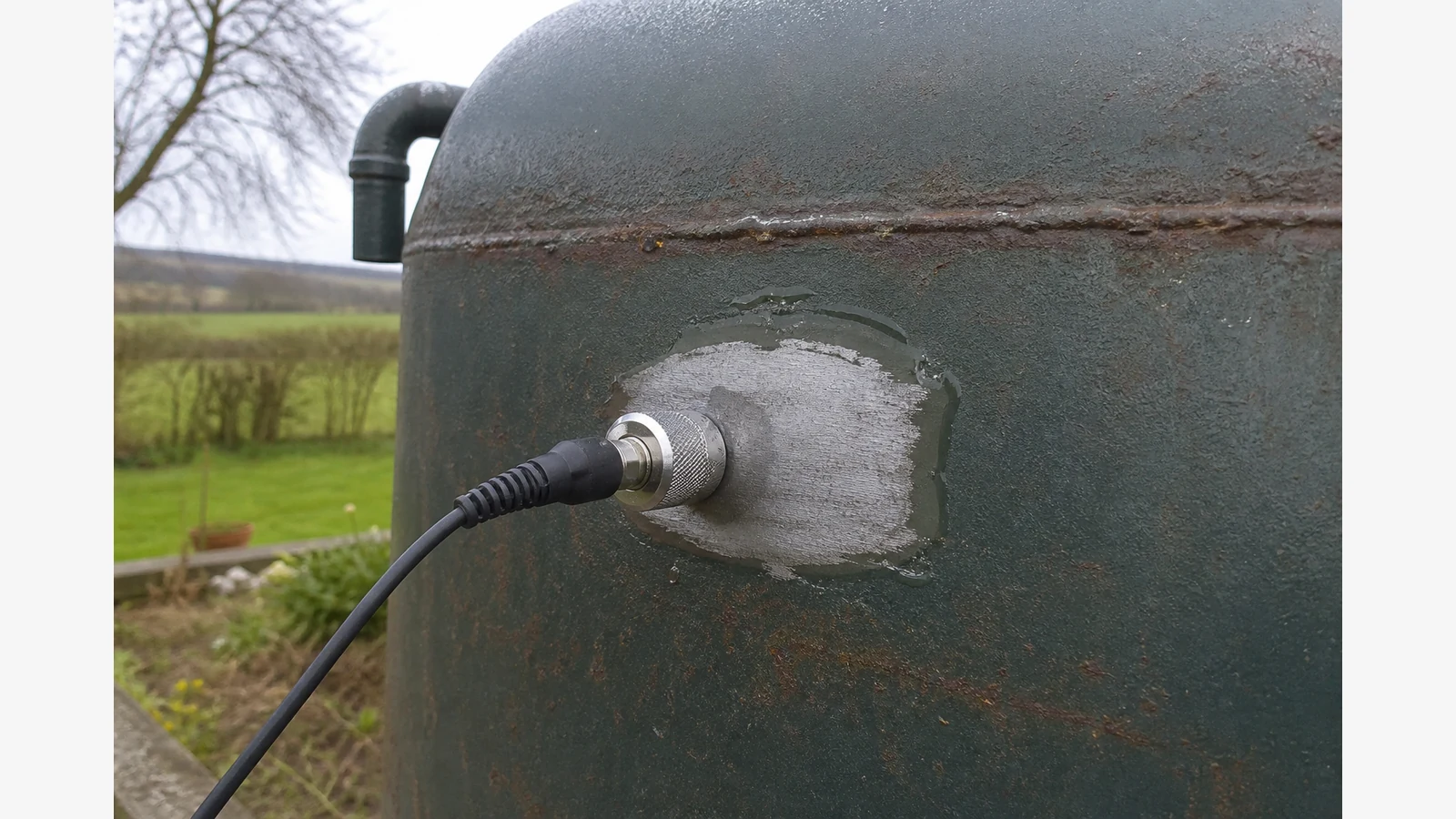
Ultrasonic thickness determination measures the time of flight of sound through the wall, as framed by ISO 16809:2025 ultrasonic thickness determination. On a domestic steel oil tank that means you can often take spot readings from the outside once a local contact area is clean enough for coupling. It does not certify remaining life, pollution risk, or insurance outcomes.
Step sequence for a cautious DIY screen
- Choose safe access and personal protective equipment; never climb unstable tanks or work alone in confined spaces.
- Wire-brush or otherwise clean a small representative patch to firm metal—loose scale blocks coupling.
- Apply a water-based ultrasonic couplant between probe and steel.
- Verify the gauge on a known steel reference, then set the steel sound velocity your instrument expects.
- Take several stable readings around suspect zones (lower shell, weld toes, historically wet areas) and record the lowest repeatable value.
- Photograph locations and note date, weather, and operator so you can brief an OFTEC technician.
A practical field workflow—surface prep, couplant, reference check, multi-point logging—is also summarised in this UK ultrasonic thickness gauge usage guide.
When to stop and call a professional
Stop DIY screening and book an OFTEC-registered technician if readings jump wildly, the surface will not couple, you see active leaks, or the tank is already overdue for annual service. Ultrasonic spot checks help you ask better questions; they do not replace a competent-person inspection.
Useful next reading
If you are choosing a handheld meter for occasional homeowner screening, compare budget versus must-have features in our guide to a cheap ultrasonic thickness gauge that actually works in the UK, and keep a daily reference habit with a thickness gauge with built-in calibration block. Product details for the DigitalUlt handheld option are on the digital ultrasonic thickness gauge product page.
Frequently asked questions
Can ultrasonic readings prove my tank will not leak?
No. Spot thickness values are only one clue. Leak risk also depends on fittings, seams, supports, and maintenance history—areas OFTEC technicians inspect during service visits.
Do I need to empty the tank first?
Not for exterior ultrasonic contact points. You still need safe access, a clean coupling surface, and sensible judgement about working near fuel.
What if numbers look thinner than I expected?
Treat thin or unstable readings as a prompt to stop DIY work and seek professional advice promptly rather than “average away” the result.